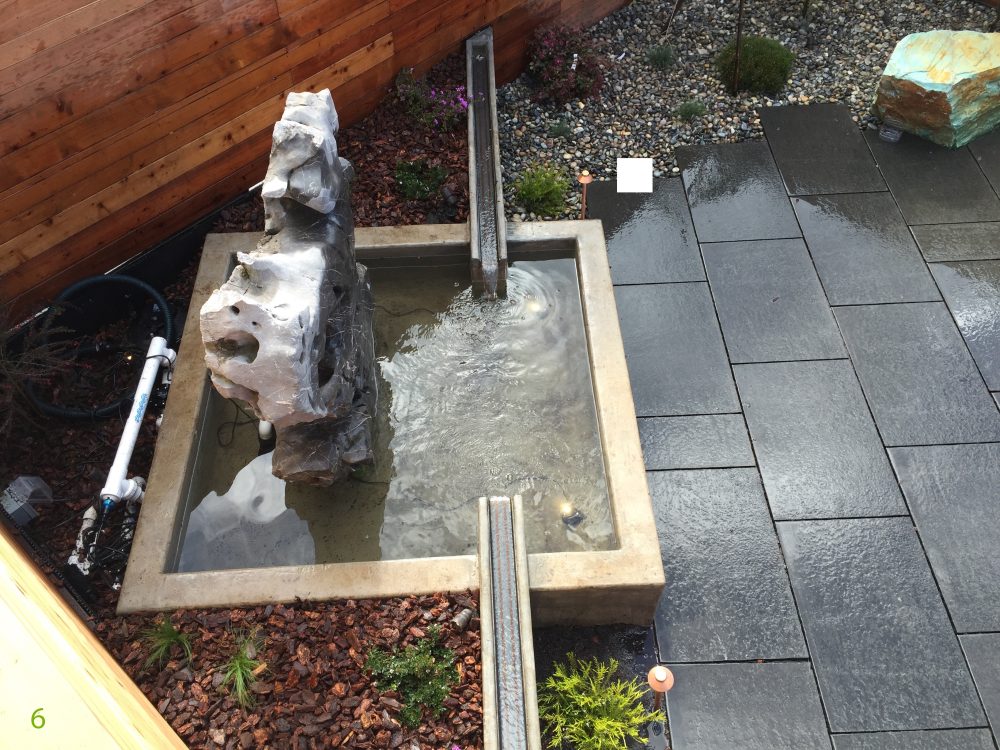
Concrete landscaping is the foundation behind many of the custom features our clients enjoy, even when the surface finish hides its presence. It supports patios that feel like outdoor living rooms, holds up retaining walls that tame steep slopes, and shapes the wide, easy steps of hillside stairs. We shape it into sleek fire tables, sculptural water basins, raised planters, and winding garden paths that stay level year after year.
When it comes to hardscape design, concrete is a versatile material. Whether we’re crafting a minimalist courtyard for quiet reflection in Parkside or a multilevel entertaining terrace in Corona Heights, concrete delivers. It provides clean edges, sweeping arcs, and unified surfaces that tie the entire landscape together. We can add built-in seating, lighting niches, and drainage channels directly to the pour, saving space and eliminating future disruptions.
This article walks through some of the applications we design and build for outdoor living spaces in the Bay Area. Here’s how each concrete hardscaping ideas might serve your own outdoor goals.
Explore the many ways concrete can shape your space
From sloped backyards to small city patios, concrete adapts to a wide range of site challenges and landscape design ideas. Its ability to take on different forms, textures, and finishes makes it a go-to material for both practical needs and standout features. Below, you’ll find ideas for how concrete can bring function, style, and lasting value to every corner of your landscape.
Create spacious modern patios with integrated fire features and planters.
A single, well‑poured concrete slab can turn a sloped backyard into a flat entertaining zone. Add a flagstone pattern, and it’s hard to tell it’s a stamped concrete patio instead of quarried slate. For multilevel gardens, you can add floating seating walls and planter edges. Adding seats to the walls allows for less outside furniture to obstruct walking paths while still giving guests places to sit.
Elevate your walkways and driveways with textured surfaces and visual flow.
Exposed‑aggregate concrete helps prevent slipping when our famous summer fog rolls in. We often seed pea gravel or black basalt chips into the surface to match nearby stonework. At driveway entries, scored panels framed by darker colored borders can guide the eye (and the car) straight to the garage. For walkways, you can use concrete pavers or concrete stepping stones for added curb appeal.
Reinforce hillsides with concrete retaining walls and hillside stairs that blend into the landscape.
Concrete block systems or steel‑reinforced poured walls can handle the sideways pressure that San Francisco hillsides throw at them. We can pour stair flights right into those walls so you move easily from terrace to terrace.
Each terrace can be set for its own use. For example, you can turn the first terrace into an outdoor kitchen. The next terrace might have a flower bed with a custom water feature, or a landing with stylized concrete benches.
This leveled variety reflects our overall approach to making garden stairs and hillside paths both practical and inviting. For a softer look, we can cover the concrete with natural stone while keeping the steel-reinforced core.
Add warmth and movement with concrete fire features and water elements.
From smooth-edged fire tables and veneer-covered fire pits to cascading water walls, concrete’s heat and moisture tolerance make it an ideal choice. As hardscape material, concrete is excellent for water features like fountains. Some mixes allow us to create more fanciful shapes vs traditional mixes that are great for old fashioned trough fountains (which are beautiful in their own right).
Define garden spaces with raised concrete planters and clean-edged borders.
Colored concrete planters tie the shades of the garden together and never warp under wet soil. Low concrete edges can define the lines of your lawn. They also help you keep gravel paths tidy without the need for metal strips that can pop loose over time.
Featured Project with Concrete Hardscaping
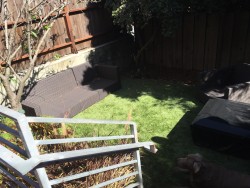
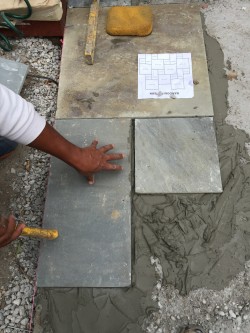
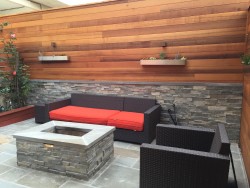
We love to use this backyard project in Noe Valley as an example of what you can do with concrete as a base product. Maybe the word “concrete” brings pictures of boring gray hardscape, but this is far from it.


How does concrete compare to other materials?
Choosing the right surface material comes down to how you want the space to look, feel, age, and perform over time. For example, concrete excels at large custom shapes with low upkeep. Natural stone delivers unmatched, organic character at a higher installed cost. Wood decking brings warmth and comfort, but requires regular maintenance.
The comparison below breaks out key differences in design flexibility, aesthetics, maintenance, performance, sustainability, and cost. Think about the way you want your outdoor area to look and whether it needs to be easy to maintain, then match that to your material choice.
Each material has a level of design flexibility.
How adventurous do you want to be? Do you want simple rectangles, flowing curves, or custom forms that integrate steps, planters, and seating?
- Concrete is often poured by forms that can be made into almost any shape. Curves and custom features can be integrated into a single pour.
- Natural stone is shaped piece by piece. Complex forms can be achieved, but typically require more cutting and labor.
- Wood decking is built on straight framing. Curves are possible but need special structural planning.
Concrete, stone, and wood have different aesthetic feels.
Are you drawn to a smooth modern surface, the natural variation of stone, or the warm organic feel of wood underfoot?
- Concrete can look like stone, brick, or wood, or left with a clean, monolithic look.
- Natural stone offers unique textures and colors, with organic patterns that vary from piece to piece.
- Wood decking creates a warm, natural atmosphere and provides visual and tactile softness.
Consider your ability to maintain your concrete hardscaping.
How much time and upkeep are you comfortable committing to over the years?
- Concrete typically requires occasional cleaning and resealing every few years.
- Natural stone may need sealing, re-pointing, or resetting depending on the type of stone and exposure.
- Wood decking usually needs sanding, staining, or sealing every 2–3 years, especially in exposed areas.
Each surface performs differently when it comes to accessibility and durability.
Do you need a smooth, continuous surface for wheels and furniture, or are natural joints and board gaps acceptable?
- Concrete can be an unbroken surface. This is ideal for wheelchairs, strollers, and rolling furniture.
- Natural stone includes joints that require solid base prep and good drainage to stay level over time.
- Wood decking has built-in board gaps for drainage; some debris can collect between boards, and fasteners may loosen with age.
Some materials are more sustainable than others.
Is reducing the material’s carbon and sourcing footprint a priority that will influence your choice?
- Concrete can include recycled or supplementary materials to reduce its carbon footprint.
- Natural stone is a natural material, but it can involve significant energy use during quarrying and transport.
- Wood decking can be made from sustainably harvested species or composites, though availability and impact vary by source.
Some materials are more expensive up front, and others are more expensive for upkeep.
Are you optimizing for the lowest lifetime cost, willing to invest more upfront for character, or balancing initial spend against future upkeep?
- Concrete is often cost-effective for large, open surfaces.
- Natural stone typically has higher material and labor costs due to handling and installation methods.
- Wood decking falls in the middle range for installation cost, with maintenance adding to the long-term expense.
Stone still wins for natural beauty, and wood shines for decks or where a softer underfoot feel matters. Yet for most ground‑level hardscape needs (especially large, clean‑lined spaces), concrete delivers a compelling blend of value, strength, and style.
Tips for keeping concrete beautiful for decades
Even the strongest material benefits from thoughtful care, and a few proactive habits will keep your concrete surfaces looking as polished in year ten as they did the month after installation. Proper design and installation give you the foundation, but long‑term appearance hinges on routine, light‑touch maintenance.
- Sweep regularly to prevent leaves, dirt, and debris from breaking down and staining the surface.
- Rinse with a garden hose or low-pressure washer seasonally, especially after windy or dusty conditions.
- Use mild detergent for spot cleaning. Avoid acidic or harsh cleaners that can break down sealers or stain the concrete.
- Reapply sealer every 3–5 years (or as recommended). A breathable, penetrating sealer helps resist stains and moisture without making the surface slippery.
- Avoid de-icing salts and harsh chemicals, especially in winter months. They can degrade the concrete over time.
- Keep planters off the surface or use pot risers to avoid trapped moisture and mineral leaching that can cause discoloration.
- Watch for pooling water. Redirect sprinklers or improve drainage if you notice water consistently sitting in one spot.
- Inspect annually for hairline cracks or wear, especially in high-traffic areas. Early touch-ups help prevent larger issues.
- Move heavy furniture or grills carefully. Use protective pads or rolling carts to avoid scuffs or surface chips.
- Trim back overhanging vegetation that may drop staining materials or hold moisture against the surface.
These tips clarify the practices we advise clients across San Francisco’s varied microclimates, from foggy coastal zones and sunny slopes to everything in between, so your investment stays strong and attractive for decades.
Concrete provides strong foundations and lasting impressions.
From sweeping terraces in Corona Heights to pocket patios in the Outer Sunset, concrete lets us shape usable, low‑maintenance outdoor rooms that feel timeless. Its structural muscle gives steep yards stable footing, while its aesthetic range – smooth, textured, or color‑infused – means we can match any architectural style.
Mixed with thoughtful plantings, lighting, and custom details, concrete shows how practicality and beauty can share the same form. When you’re dreaming about a garden that lasts, concrete landscaping is the solid foundation that makes almost any hardscaping idea possible.