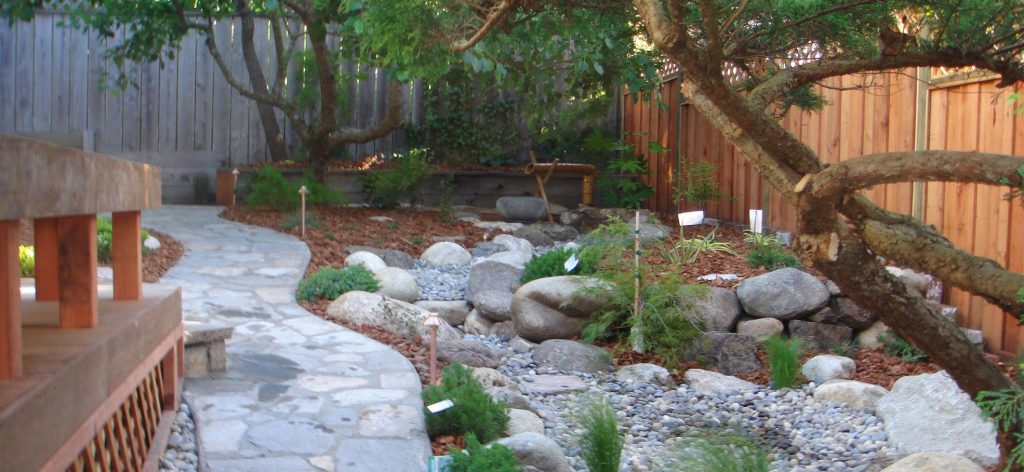
Japanese gardens have been a major part of culture in America for nearly a century and a half. However, they still remain a mystery for most people. Japanese gardens are among the most beautiful in the world. This is because these gardens start with the intent to induce a particular feeling. Today, landscape professionals design these amazing gardens around principles and guidelines that date back more than a thousand years.
Some of those guidelines include natural patterns of rock formations, natural growing plants, and asymmetrical designs. Some gardens arouse feelings of being near a forest stream or wetland. There are also designs patterned after rolling hills. When designing your own beautiful Japanese garden paradise, consider the following facts and tips.
1. Keep in mind that basics consist of plants, water, and rocks.
You can find rocks most anywhere. Stones and pebbles can arrange to create the appearance of flowing water. Additional elements for consideration can include stone lanterns, bridges, arbors, and water basins. Plants, set carefully, can help create an illusion of depth where the designer places large plants in front, and smaller ones in back.
2. Your garden’s purpose is to reflect nature’s perfect balance.
Instead of copying nature exactly, the tradition is to evoke nature, to hint at its forms, textures and feelings. Rocks and stones represent islands. Waterfalls represent a state of purity and serenity. Stone or wooden bridges imply immortality and a pathway to paradise. Stairs and intriguing pathways provide a journey for the soul. Lanterns represent the inner light that a person can discover within.
Two enduring principles: asymmetry (avoiding overly rigid symmetry) and borrowed scenery (where elements beyond the garden are incorporated) help with that, as well as concealment. For example:
Asymmetry
A large rock may be balanced by a pond or a shaped tree rather than a mirror image on the other side. This balance without duplication creates visual intrigue and natural feel.
Borrowed scenery (shakkei)
Where possible, a garden uses nearby hills, trees, or distant views as part of the composition, making the space feel larger and more rooted in its surroundings.
Wikipedia
Concealment/reveal
Rather than allowing the whole space to be viewed from one spot, a path might lead you to see one scene, then turn to reveal another. This builds a sense of journey.
In other words: you’re creating a space that resonates—not just visually, but emotionally—inviting the viewer/homeowner to slow down and experience the garden rather than simply look at it.
3. Lay the stones first to design your path or walkway.
When you plan your space, think of it as a small journey rather than a static tableau. The path you walk, the stones you step on, the view you catch… all matter. This is the path you can take to enjoy your garden’s beauty. Larger stones imply stillness and rest.
4. Surround the stones with trees, plants that flower, or shrubs.
When you plan your space, think of it as a small journey rather than a static tableau. The path you walk, the stones you step on, the view you catch… all matter. Without much space, formatting your yard is critical. You will also have to decide how formal, or not, you want the garden to be. Select your plants or trees for seasons and colors.
5. A water feature adds the perfect touch.
A simple water pond can use bamboo, or some other material, and operate using very simple and inexpensive mechanics.
6. Decorations can include lanterns or authentic Japanese furniture.
Just keep things to a minimum. Your goal is to achieve a natural look and not make your garden look like a museum filled with artifacts. On the other hand, some empty spaces are okay since empty portions are key Zen garden elements.
Japan, the Land of the Rising Sun, is famous for its beautiful gardens. In fact, every year, millions of people travel to Japan to visit the country’s gardens, but you can have a Japanese garden in your own back yard, even in the midst of bustling San Francisco.
We specialize in creating Japanese gardens. Contact Tamate Landscaping to help you build the beautiful oasis of your dreams.