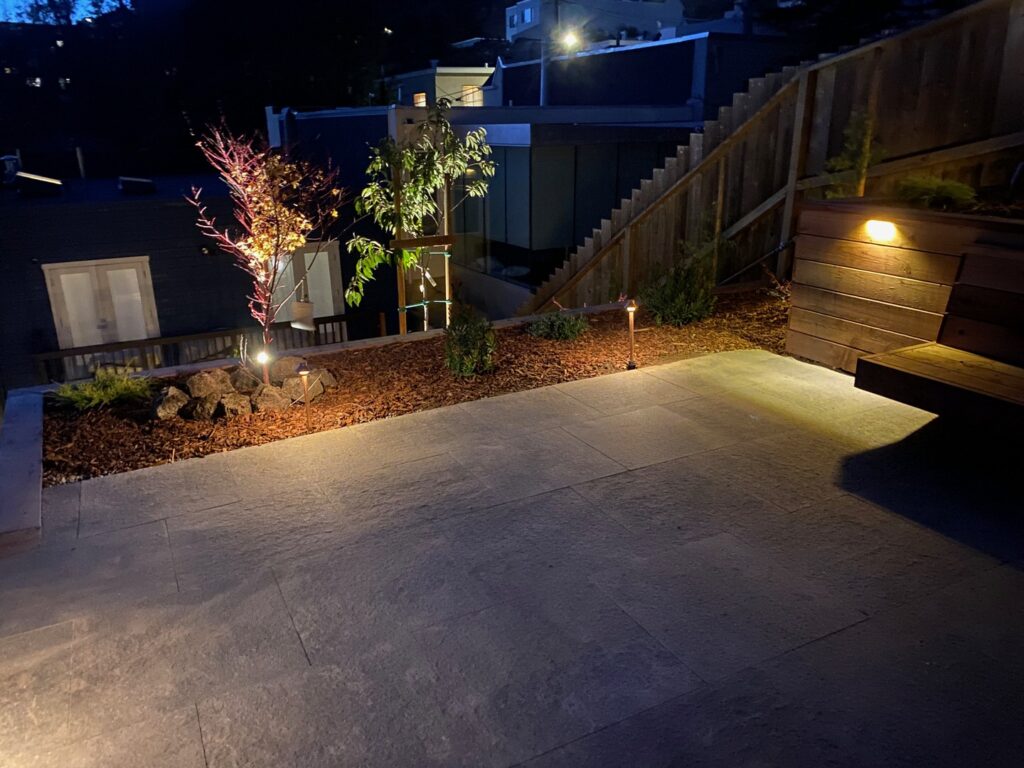
Outdoor living has become a regular way of life in the Bay Area. We just… do the things. Most of us love having friends over, sipping coffee or tea on a foggy morning, or enjoying a few quiet moments. We want spaces that feel comfortable and beautiful, while being practical at the same time. That’s why the question that is often most important to ask first is: should I get a patio or a deck?
Both options add livable square footage and value to your home, but they also have their own advantages and limitations. And San Francisco’s famously hilly terrain may provide opportunities that flat yards might not have. Let’s take a closer look at both to see which is best for your home.
What is a patio?
A patio is built directly on the ground, often paved with stone, brick, stamped concrete, or modular pavers. They either sit flush with the earth or almost flush, and tend to feel like a natural extension of the landscape. They’re great for yards with flat or gently sloping ground, where minimal grading is required to create a stable surface.
Patios are durable.
Stone and concrete can last decades with just the occasional cleaning and sealing. Unlike wooden decks, they aren’t susceptible to rot or insect damage. Of course, this makes patios particularly appealing if you want a “set it and forget it” space that doesn’t demand frequent upkeep.
The style they bring is equally timeless. Material choices are very versatile and can compliment any garden design. From mosaic patios to cut stone, there are many options to either blend your hardscaping with soft plantings for a natural look or provide a stark contrast between the two.
What is a deck?
In contrast, a deck is a raised platform made from wood, composite, or other engineered materials. Decks are built above the ground and supported by posts and framing, which makes them especially useful in sloped or uneven yards. In many Bay Area neighborhoods, homes are built into steep hillsides. Without decks, these backyards would be nearly unusable.
A deck not only creates functional space where none existed, but it can also take advantage of views. From a hillside property, a deck could look over the city, the Bay, or a lush backyard garden.
Decks can be constructed from traditional wood like redwood or cedar. Choices like these provide a rich, warm feeling to the yard. However, many homeowners are turning to composite materials that mimic wood but require far less maintenance. Composites last longer than natural wood and don’t need staining and sealing as often.
How patios and decks compare
While both patios and decks are designed to provide outdoor living space, they differ in cost, maintenance, durability, and overall aesthetic.
Cost considerations
Patios are often more affordable upfront, provided the yard is already relatively level. If excavation, retaining walls, or major grading are required, however, costs can rise. Decks usually carry a higher price tag due to the need for structural framing, support posts, and additional permits, but they often become the more practical solution in hillside settings.
Maintenance requirements
A well-built stone or concrete patio needs very little ongoing care. Decks, on the other hand, require sealing, staining, and inspections to ensure safety over time. Especially if they’re made of natural wood.
Composite decks reduce the amount of care significantly. They offer the appearance of wood with a fraction of the maintenance.
Durability and lifespan
A stone patio can last thirty to fifty years or more, making it a long-term investment. In coastal areas, fog and moisture speed up the wear and tear on decks, and they tend to have shorter lifespans. Depending on materials, decks may need resurfacing or replacement after ten to twenty years (as mentioned above, composites last longer).
Design and style
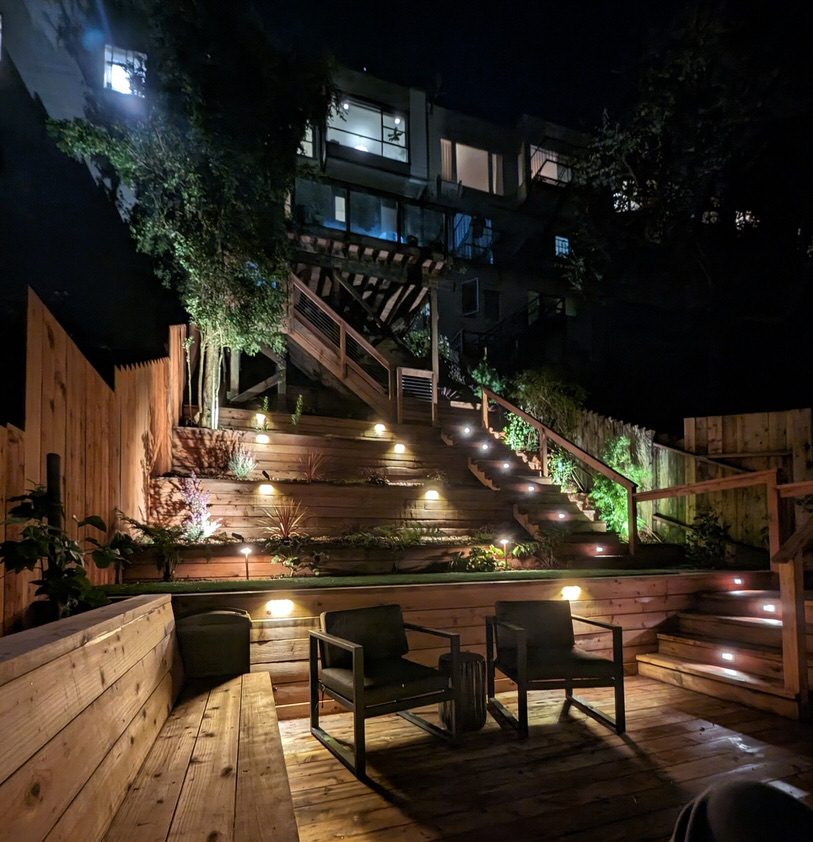
Patios often create outdoor areas that feel like natural parts of the garden. They add ambiance to the outdoors, making the area look more rustic, Mediterranean, or Zen-like depending on the material. Decks adapt easier to challenging slopes and highlight views. In one project that we’re especially proud of, pictured below, the affects can be stunning.
Which is right for your home?
The decision between a patio and a deck really comes down to your yard and your lifestyle.
If your backyard is flat or gently sloped, a patio may be the most practical and budget-friendly option. Its durability and low maintenance make it ideal if you want a permanent outdoor living area without ongoing upkeep. You can read “Patio Design That Shines All Summer Long” or “Creating the Perfect Patio: Designs and Ideas” for patio inspiration.
On the other hand, if your home sits on a steep hillside like many do in San Francisco, a deck can give you more outdoor living space that would otherwise be wasted. With the right design, it can even provide a better indoor-to-outdoor flow, especially when connected directly to your home’s main living areas.
For those who love entertaining, both options are good choices. Patios create intimate, grounded gathering spaces surrounded by gardens. Decks provide seamless transitions from the kitchen or living room and can host large gatherings with a view.
If budget is the primary concern, patios often come out ahead, unless the ground needs significant excavation. In that case, a deck may actually be the simpler and more affordable choice.
The best of both worlds
Sometimes the most compelling option isn’t choosing between a patio or a deck at all, but combining the two. Many Bay Area homeowners find that a multi-level design offers the most flexibility. A deck might extend from the home, creating a dining area with great views, while stairs lead down to a stone patio that becomes a firepit lounge or garden retreat.
This combination maximizes usable space and creates multiple outdoor “zones” that serve different moods and functions. Together, they offer a backyard experience that evolves throughout the day. You get morning coffee on the deck and get-togethers in the evening around the patio firepit.
Conclusion
So, is one option better than the other? The truth is that patios and decks are equally valuable, but their strengths shine in different settings. A patio may be the right choice for a flat backyard and a low-maintenance lifestyle, while a deck may be the solution for a sloped property or for homeowners who crave views and a seamless indoor-outdoor connection. And sometimes, the most magical solution is both.
We specialize in designing patios, decks, and hybrid spaces that make the most of Bay Area terrain. Whether you’re drawn to the permanence of stone, the lightness of wood, or the harmony of both, our team can help you create an outdoor living space that feels natural, functional, and uniquely yours.